
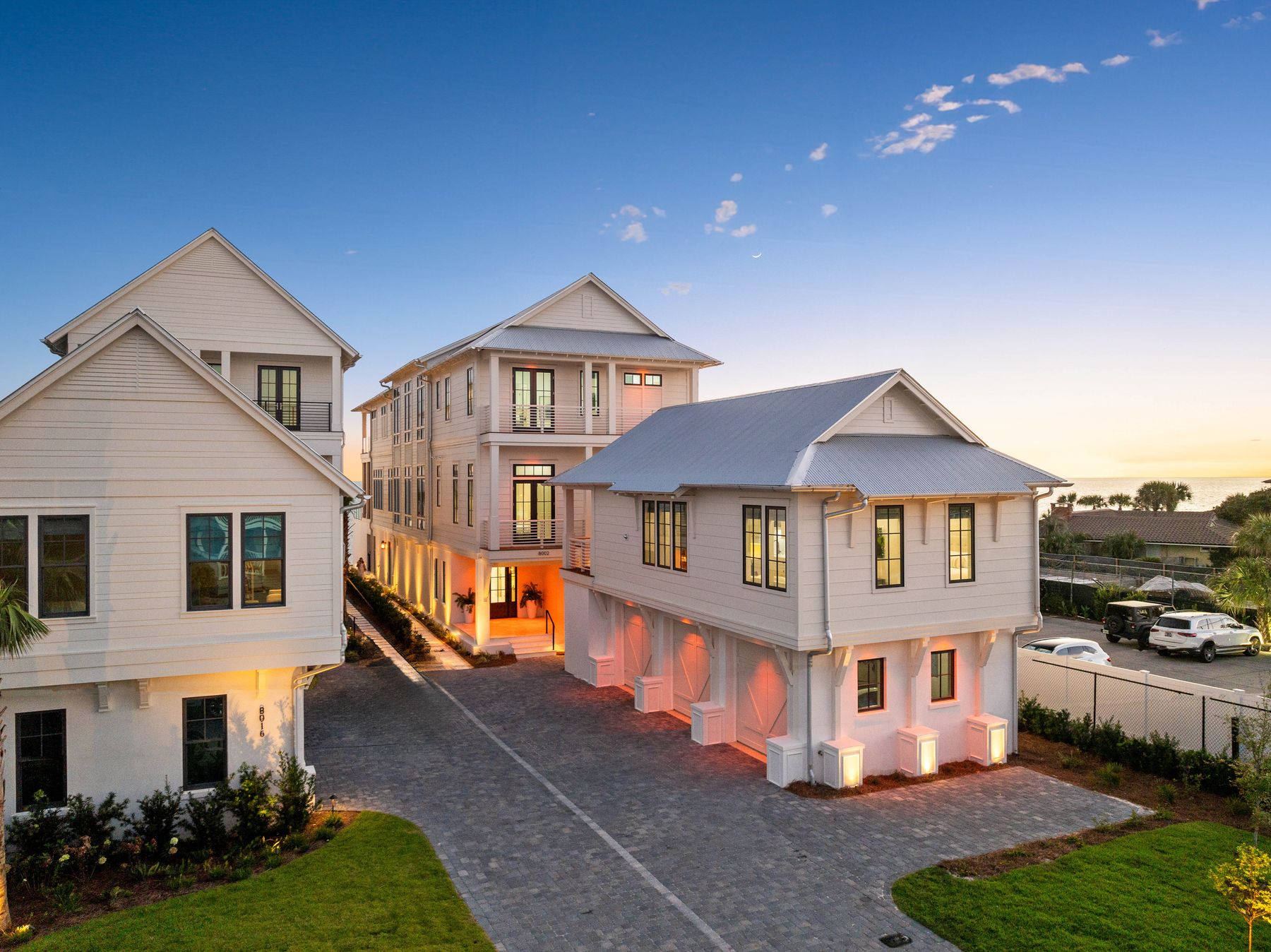
A home on the Gulf lives a harder life than a home inland. Salt air, humidity, intense sun, and the occasional storm test every material on the outside of the house. The choices made during design and construction decide whether a home looks new in ten years or needs constant attention.
Start with the envelope
The building envelope, meaning the roof, walls, windows, and doors, is the home's first defense. On 30A we focus on keeping water out and letting any moisture that gets in dry out. That means careful flashing at every window and door, a well-detailed weather barrier, and wall assemblies designed for a hot, humid climate.
Roofing
Standing-seam metal roofs are common on the coast for good reason: they shed water and wind well and last for decades. Whatever the roofing material, the details underneath matter just as much. A sealed roof deck adds a second line of defense if roofing is damaged in a storm, and stronger connections between the roof and walls help the structure hold together in high winds.
Windows and doors
Much of coastal 30A sits within Florida's windborne debris region, where openings must be impact rated or protected. Impact-rated windows and doors provide that protection without shutters to install before a storm, and they also reduce outside noise. Frame finishes and hardware should be rated for coastal exposure.
Siding, trim, and decking
Fiber cement siding, quality painted trim, and stucco or masonry all perform well when properly detailed. On porches and decks, materials that resist rot and stay comfortable underfoot in summer sun make a big difference in long-term maintenance.
Fasteners and hardware
Salt air corrodes ordinary steel quickly. Stainless or coated fasteners, connectors, and exterior hardware cost a little more and prevent rust streaks and failures down the road.
Going beyond the minimum
The Florida Building Code sets a strong baseline. For clients who want more, standards such as the FORTIFIED Home program from the Insurance Institute for Business & Home Safety offer a recognized benchmark, and some insurers offer premium discounts for certified homes.
Every site is different, and the right package depends on location, exposure, and budget. Talk with us about your project.